Cairns Tickets

Moore Reef: Snorkelling & Pontoon Day Trips on the Outer Great Barrier Reef

Moore Reef is the closest outer Great Barrier Reef to Cairns, and that single fact is why it's one of the most-booked reef days in Tropical North Queensland. Sitting roughly 45–50 km off the coast, it's far enough out for the clear water and healthy coral people picture when they imagine the Great Barrier Reef, but close enough to reach in about 90 minutes by fast catamaran.

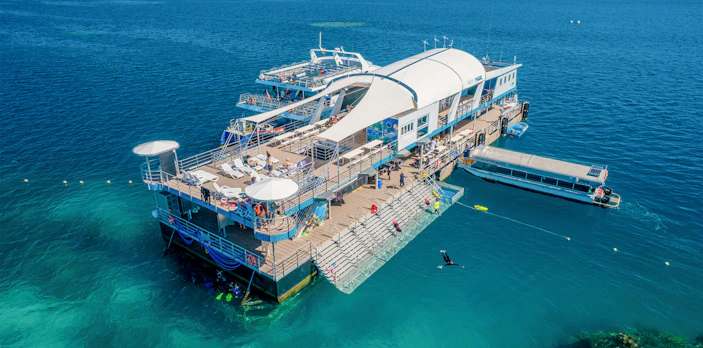
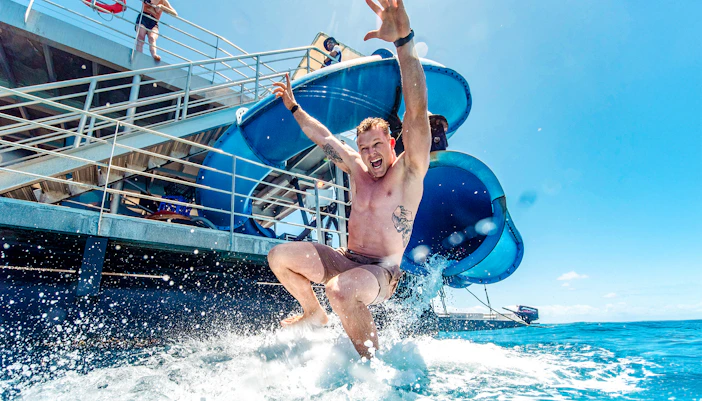
It's also a pontoon reef. A large, stable platform is moored permanently over the coral, giving you a base to snorkel from, a kids' pool and waterslide, a glass-bottom boat, a semi-submersible and an underwater observatory. That mix is what makes Moore Reef work for everyone in the group: confident snorkellers and certified divers, but equally families, first-timers and people who'd rather not get in the water at all.

This guide covers what Moore Reef is actually like, how it compares to Green Island and Fitzroy Island, what to expect on the day, and the three reef cruises that visit it, so you can pick the one that suits how you want to see the reef.

What makes Moore Reef special

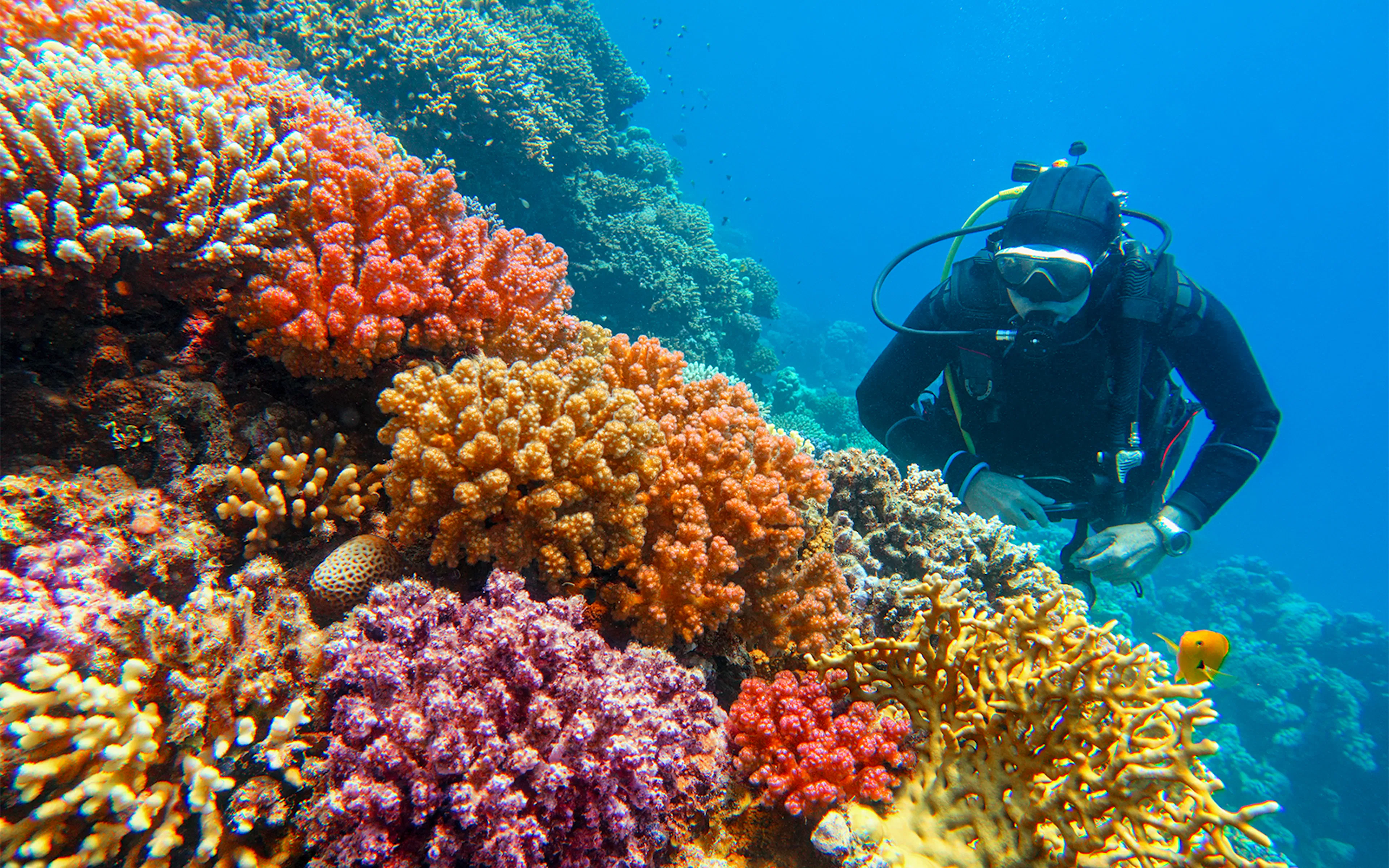
Scuba diver exploring vibrant coral reef with diverse hard corals.
1/5

It's the outer reef, closest

Moore Reef is the nearest outer-reef site to Cairns. The outer reef generally has clearer water and better coral cover than the inshore fringing reefs around the islands — so you get the "proper" Great Barrier Reef payoff without the longest boat trip.

A horseshoe reef the size of a suburb

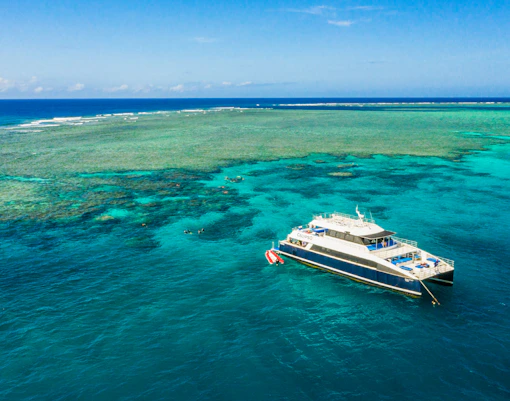
Moore Reef is a horseshoe-shaped reef spanning around 2,650 hectares, inside the Great Barrier Reef Marine Park. Depths run from about 1 metre in the snorkel lagoon to 25 m on the walls, with visibility often up to ~20 m.

Genuinely diverse marine life

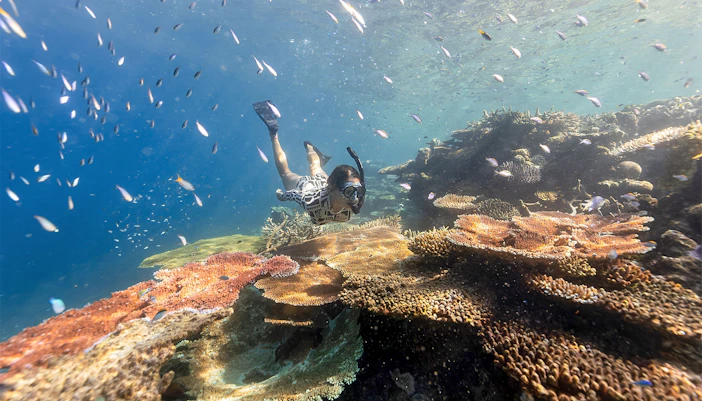
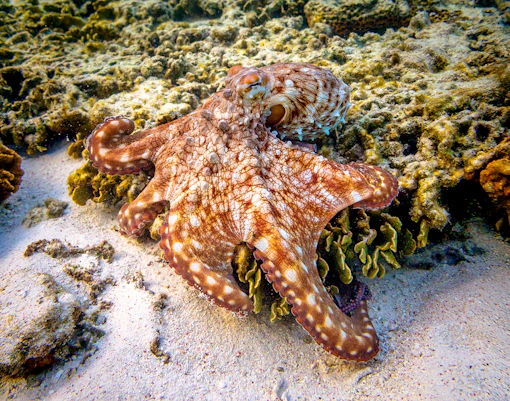
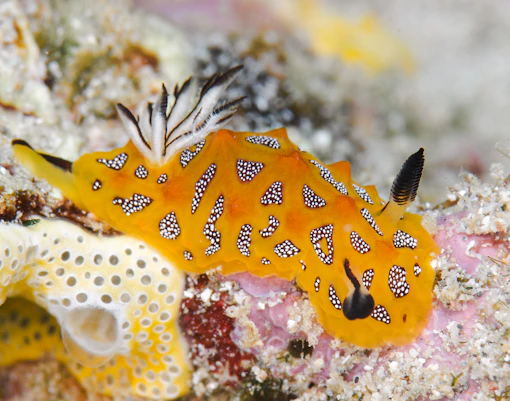
Staghorn, plate and brain corals; parrotfish, butterflyfish, angelfish and anemonefish ("Nemo"); resident Maori wrasse, giant clams, rays, sea turtles and, on the drop-offs, schools of fish and reef sharks.

Built for non-swimmers, not just divers

Because it's pontoon-based, the reef is reachable whether or not you can swim — the observatory, semi-sub and glass-bottom boat let you see the coral bone-dry.

The aerial shot is on the table.

The Moore Reef pontoons have a helipad, so a scenic flight over the reef is available as an add-on, the classic Great-Barrier-Reef-from-above photo.

Not sure which reef is yours? 🐠

🤿 Moore Reef — clearest water, best coral, no beach. Best for snorkelling & diving the outer reef.

🏝️ Green Island — sand cay, beach + easy reef, quick to reach. Best for a relaxed island day.

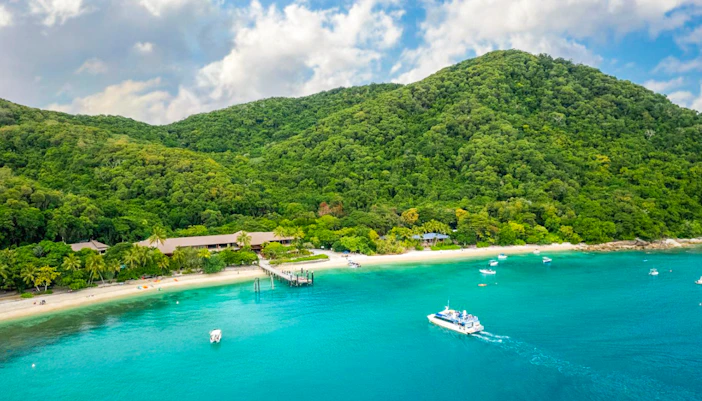
🌴 Fitzroy Island — beaches, bushwalks & Nudey Beach. Best for beach + reef adventure.

👉 Still deciding?

Set the expectation honestly: Moore Reef has no beach. It's open ocean with a platform. If your group wants sand and rainforest as well as coral, that's the Fitzroy Island + Moore Reef combo below — or Green Island.

How Moore Reef is protected

Moore Reef sits inside the Great Barrier Reef Marine Park, and the way you visit it is shaped by that. The pontoons use fixed moorings rather than anchors, so boats don't drag chain across living coral; visitor numbers are managed; and briefings cover no-touch, no-stand reef etiquette. That's also why the reef is visited by pontoon in the first place: a permanent, low-impact base concentrates activity in one managed spot instead of spreading anchor damage across the reef.

Aerial view of a pontoon with tourists in the Great Barrier Reef, Australia.

Three ways to experience Moore Reef

Things to know before visiting Moore Reef

  • How far / how long: About 45–50 km offshore, ~90 minutes each way by fast catamaran.
  • Seasickness: It's open water and can be choppy in the trade-wind months. If you're prone to motion sickness, take medication before you board, stay on the open deck with your eyes on the horizon, and sit low and central. Crews carry ginger tablets and can help.
  • Stinger season (roughly Nov–May): Marine stingers are possible in the warmer months. Operators provide lycra/stinger suits and supervise the swim zones; wear the suit, it also doubles as sun protection.
  • What to bring: Reef-safe sunscreen, a hat, a towel, a change of clothes, and a card for on-board extras. Most gear (mask, snorkel, fins, suit) is included.
  • Will it be crowded? The pontoon is a social, structured activity hub, not a private reef; expect other guests. Daily numbers are capped and activities are staggered, so it rarely feels chaotic, but don't expect solitude.
  • What costs extra: Snorkelling, lunch and the pontoon activities are included. Intro/certified dives, helmet ("seawalker") dives, guided snorkel tours, scenic helicopter flights and professional photos are typically paid add-ons. Check each product's inclusions before the day.
  • Is the reef bleached/dead? No, that headline overgeneralises the whole system. Outer-reef sites like Moore Reef still show strong, colourful coral and abundant life, though the reef does experience intermittent bleaching. Recent operator photos are the best gut-check.

What to expect: A day at Moore Reef

Most Moore Reef trips are full-day and follow the same rhythm. A typical day looks like this:

  • 8:45–9:30am: Check in and board at the Reef Fleet Terminal, Cairns.
  • ~10:15am: Depart Cairns on a fast, air-conditioned catamaran.
  • ~12pm: Arrive at the Moore Reef pontoon; safety briefing and activity orientation.
  • ~12–4pm: Around 3–4 hours on the reef: snorkelling from the platform, the waterslide and kids' pool, scheduled semi-sub and glass-bottom boat runs, the underwater observatory, fish feeding and marine talks, buffet lunch, and any optional dives, helmet walks or scenic flights.
  • ~4pm: Depart the reef.
  • ~5:30pm: Arrive back in Cairns.

The number to plan around: Roughly 3–4 hours actually on the reef and about 3 hours in transit round-trip.

Moore Reef for non-swimmers and families

You do not need to swim to enjoy Moore Reef. The pontoon is built around that.

  • Stay completely dry: the underwater observatory, the semi-submersible and the glass-bottom boat all show you living coral and fish without getting in.
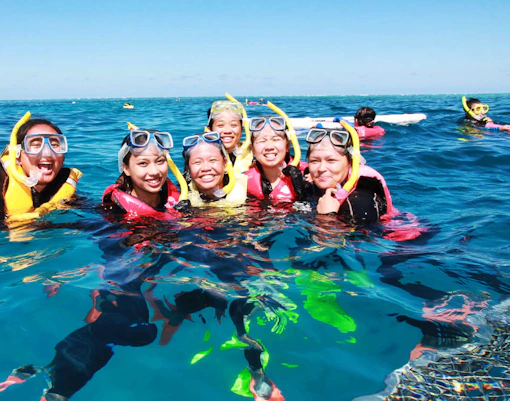
  • Ease in gradually: snorkel platforms with stairs and a shallow, supervised lagoon; flotation vests and lycra suits; and staff in the water. Kids have an enclosed pool and (on the Sunlover pontoon) the waterslide.
  • Confident snorkellers and divers still get walls, bommies and drop-offs, guided snorkel tours, and intro or certified dives as add-ons.

If the water confidence of your group is the deciding factor, Moore Reef is the reassuring choice, and the Sunlover full-day has the deepest set of dry activities.

Frequently asked questions about Moore Reef

Moore Reef is on the outer Great Barrier Reef, about 45–50 km east of Cairns — the closest outer-reef site to the city. Fast catamarans take around 90 minutes each way.

Continue planning your reef journey