Great Barrier Reef Marine Life, Conservation & Wildlife Guide

Apart from being a snorkeling destination, the Great Barrier Reef is one of the most biodiverse ecosystems on Earth, with over 9,000 marine species across its 2,300km stretch. When you visit the reef, you're entering a living web of coral, crustaceans, megafauna, and fish in colors you didn’t know existed.

Why the reef wildlife is special:

  • Unmatched biodiversity: The reef is home to 10% of all known marine species.

  • Seasonal events like coral spawning and turtle nesting: Visiting at the right time means witnessing life in motion.

  • Many species are unique to this region: You won’t see a Maori wrasse or blue sea star just anywhere.

  • Marine life is easy to spot, even from the surface: Snorkelers regularly encounter rays, reef sharks, and turtles.

  • It’s a natural classroom: Guided tours explain behaviors, symbiosis, and reef conservation in real-time.

What to expect from the reef’s biodiversity

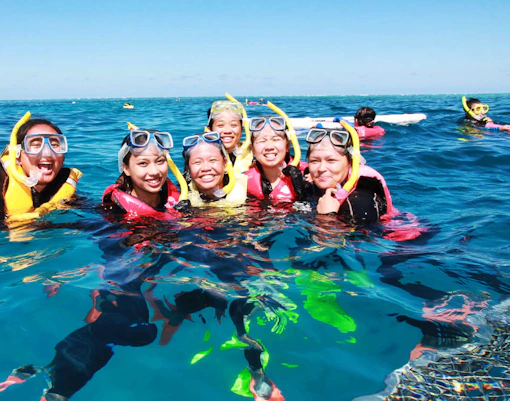
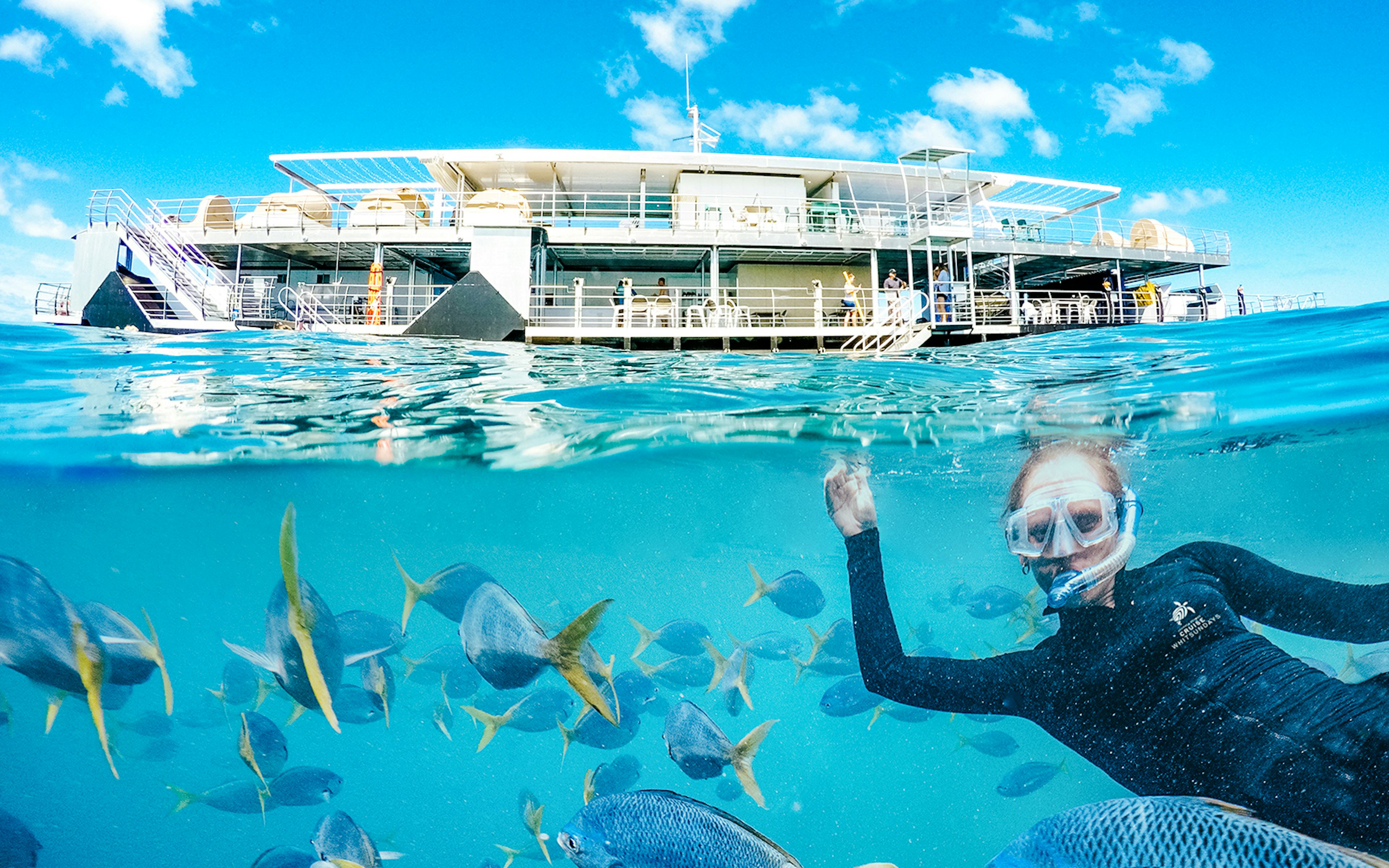
Snorkeller near pontoon with fish at Great Barrier Reef.
1/5

Over 1,500 species of tropical fish

From shimmering clownfish and butterflyfish to big schools of fusiliers and elusive moray eels, fish of every shape, size, and pattern cruise through the coral corridors.

Iconic sea turtles

Green, hawksbill, and loggerhead turtles are reef regulars. You’ll often spot them grazing on seagrass, surfacing for air, or gliding gracefully past snorkelers.

Gentle reef sharks

White-tip and black-tip reef sharks cruise the drop-offs. They may look intimidating, but these reef predators are shy and harmless, especially to humans.

Coral Diversity

The reef hosts over 600 species of coral, from branching Acropora to massive brain coral. You'll also spot sea stars, sea cucumbers, and colorful nudibranchs clinging to reef walls.

Seasonal visitors: Whales, rays, and more

In winter, keep your eyes peeled for humpback whales and minke whales. Manta rays and dolphins also frequent outer reef zones at different times of year.

Marine animals found in the Great Barrier Reef

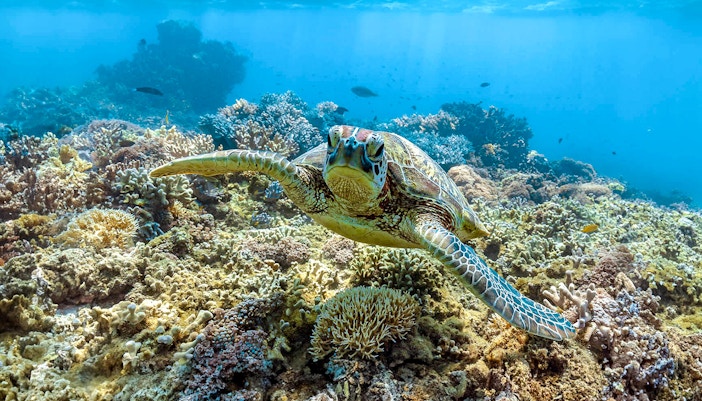
Green Sea Turtle

One of the reef’s most beloved residents. Green turtles are often seen near reef edges or sea grass beds, surfacing for air or resting under coral shelves.

Where to spot: Heron Island, Lady Elliot, and pontoon snorkel sites

Fun fact: Females return to the same beach they were born on to lay eggs.
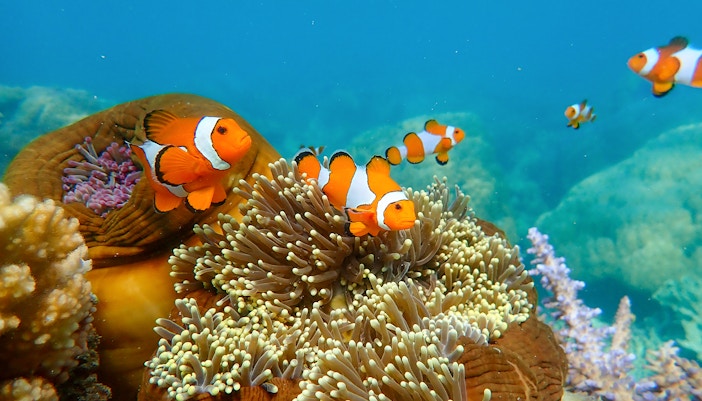
Clownfish (Anemonefish)

Made famous by Finding Nemo, these orange-and-white fish live symbiotically inside sea anemones, which protect them with stinging tentacles.

Where to spot: Shallow lagoons across the reef

Fun fact: All clownfish are born male—some later switch to female.

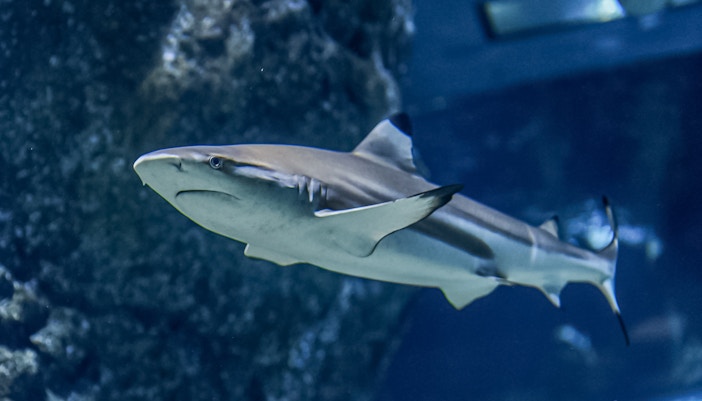
Blacktip Reef Shark

A sleek, graceful shark often spotted cruising along coral drop-offs. Usually found in small groups and very accustomed to snorkelers and divers.

Where to spot: Norman Reef, Opal Reef, and Agincourt Reef

Fun fact: Unlike many sharks, they don’t need to keep swimming to breathe.

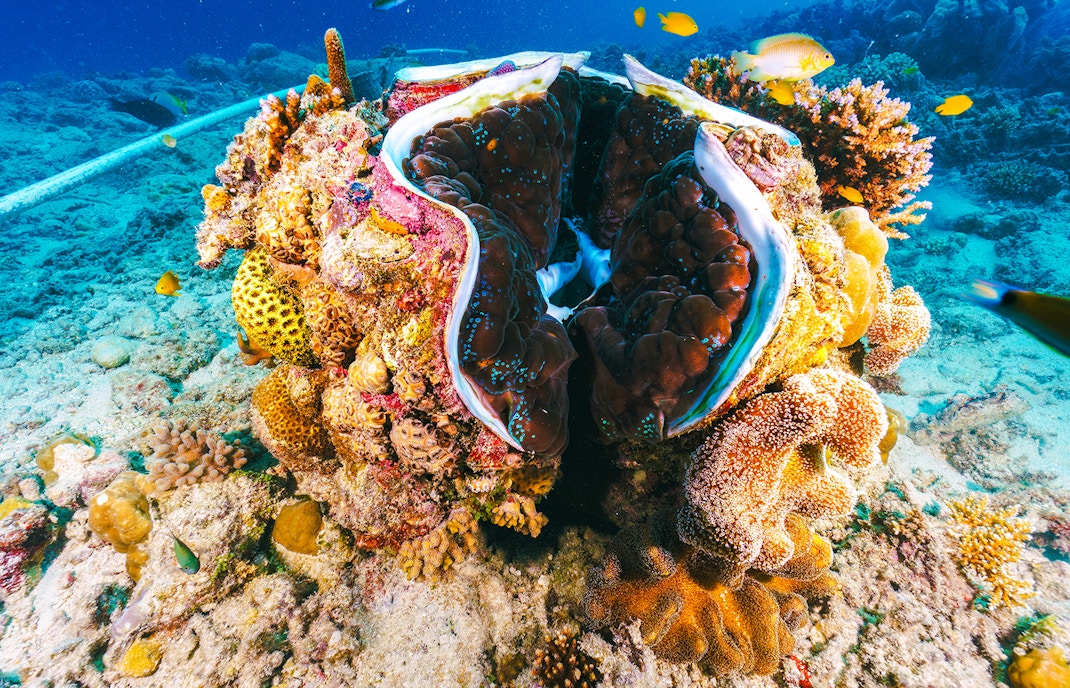
Giant Clam

Stationary but stunning, these reef invertebrates can grow over a meter wide. Their vibrant lips shimmer blue, purple, or green thanks to light-reflecting algae.

Where to spot: Moore Reef, pontoon snorkel zones

Fun fact: They can live over 100 years and weigh more than 200kg.

Dwarf Minke Whale

Rare and highly curious, these whales pass through the northern reef each winter and often approach snorkelers, creating one of the most ethical whale interactions in the world.

Where to spot: Ribbon Reefs (June–July)

When to visit for wildlife viewing

  • May–October is the best time for clear water and high marine life visibility. Winter’s cooler water encourages more pelagic species like whales and manta rays to come closer to the reef.

  • November–December is the coral spawning season. A surreal event where the reef glows and releases millions of coral eggs and sperm all at once.

  • January–March is turtle hatchling season, especially on islands like Lady Elliot and Heron.

  • June–September is the whale migration window, with opportunities to see humpbacks and even swim with dwarf minke whales on permitted tours.

Plan your visit around these events if you're focused on once-in-a-lifetime encounters.

Tips for spotting reef animals

  • Go with a guided tour: Guided tours know where to find the creatures and how to safely interact with them.

  • Stay still and float: Fish get used to your presence if you’re calm and quiet. Splashing or chasing scares them off.

  • Look for cleaning stations: These are areas where small cleaner fish remove parasites from larger ones.

  • Bring a reef fish ID card: Spotting is easier when you know what you’re looking at—and naming it is half the fun.

  • Use polarized sunglasses on boat rides: They reduce surface glare and help you spot rays, turtles, and dolphins even before you get in the water.

See these animals for yourself! The easiest way to meet the reef's wildlife is a guided snorkel on the outer reef, where turtles, reef sharks and giant clams are part of an ordinary day.

#

Is the Great Barrier Reef dying? Reef health and how it's protected

It's the question almost every visitor asks, so here's an honest answer: the Great Barrier Reef is very much alive, but it's under real pressure. The parts most people visit on a Cairns day trip, the outer reefs like Moore, Norman and Saxon, are still vibrant, colourful and full of life. At the same time, the reef faces a genuine long-term threat from climate change, and it's worth understanding what that means before you visit.

What's happening to the coral

Warming ocean temperatures cause coral bleaching — when heat-stressed coral expels the tiny algae that give it colour and food, turning white. If the water cools in time, coral can recover; if the heat lingers, it can die. The reef has now been through six mass bleaching events since 2016, and the 2024 event was the most widespread on record. According to the Australian Institute of Marine Science (AIMS), which has monitored the reef since 1986, this caused real coral loss across all three regions in 2024–25.

Why it's still worth seeing

The picture isn't one of a dead reef. Coral cover in the Central Great Barrier Reef remains above its long-term average, offshore outer reefs have generally fared better than inshore ones, and the reef has repeatedly shown a remarkable ability to recover between events — coral cover reached record highs across parts of the reef between 2017 and 2022. The reef you'll snorkel today is a living, changing ecosystem, and seeing it firsthand is one of the best ways to understand why it's worth protecting.

Why the reef matters

The Great Barrier Reef is the largest living structure on Earth and one of the most biodiverse places in the ocean — home to over 9,000 marine species, including a tenth of the world's fish. It shelters coastlines, supports thousands of jobs, and holds deep cultural significance for the Traditional Owners who have cared for it for tens of thousands of years.

How it's protected, and how you can help

The whole reef is a marine park, zoned so that sensitive areas are protected and tourism is concentrated at managed sites. Pontoons and tour boats use fixed moorings instead of anchors to avoid damaging coral, and many Cairns operators run marine-biologist talks and contribute to reef-monitoring programs like Eye on the Reef. You can help on the day by:

  • Wearing reef-safe (zinc-based or biodegradable) sunscreen
  • Never touching or standing on coral — look, don't touch
  • Keeping a respectful distance from turtles, sharks and other wildlife
  • Choosing operators with strong environmental credentials and marine-biologist guides

Visiting the reef responsibly doesn't harm it — done well, reef tourism funds the science, monitoring and advocacy that help protect it.

Frequently asked questions about Great Barrier Reef marine life

More than 9,000, including 1,500+ fish species, 600+ types of coral, 30 whale/dolphin species, 6 turtle species, and countless invertebrates.