- Operating days: Daily services between Cairns and Kuranda Morning departures (Cairns/Freshwater): Approx. 8:30am–9:55am Return services (from Kuranda): Approx. 2:00pm–3:30pm
- Duration: One-way journey: Approx. 1 hour 45 minutes to 2 hours Full-day experiences (with Skyrail or wildlife): 6–8 hours
- Best time to visit: Dry season (May–October): Clear views, comfortable weather, peak travel season Wet season (Nov–Apr): Lush rainforest, stronger waterfalls, dramatic scenery
What is the Kuranda Scenic Railway?
The Kuranda Scenic Railway is one of Australia’s most iconic rail journeys, taking you through the UNESCO World Heritage-listed Wet Tropics rainforest in Far North Queensland.
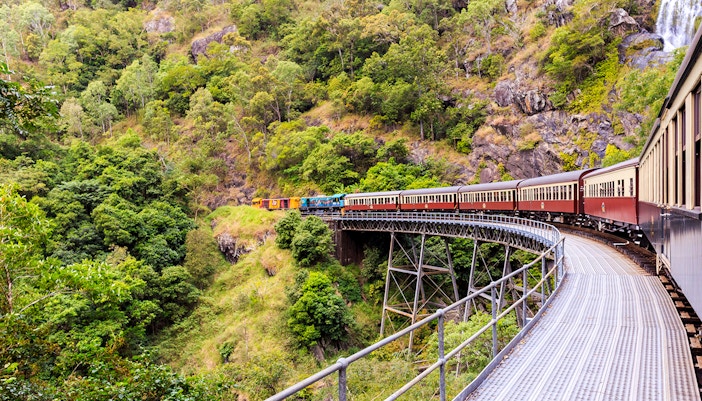
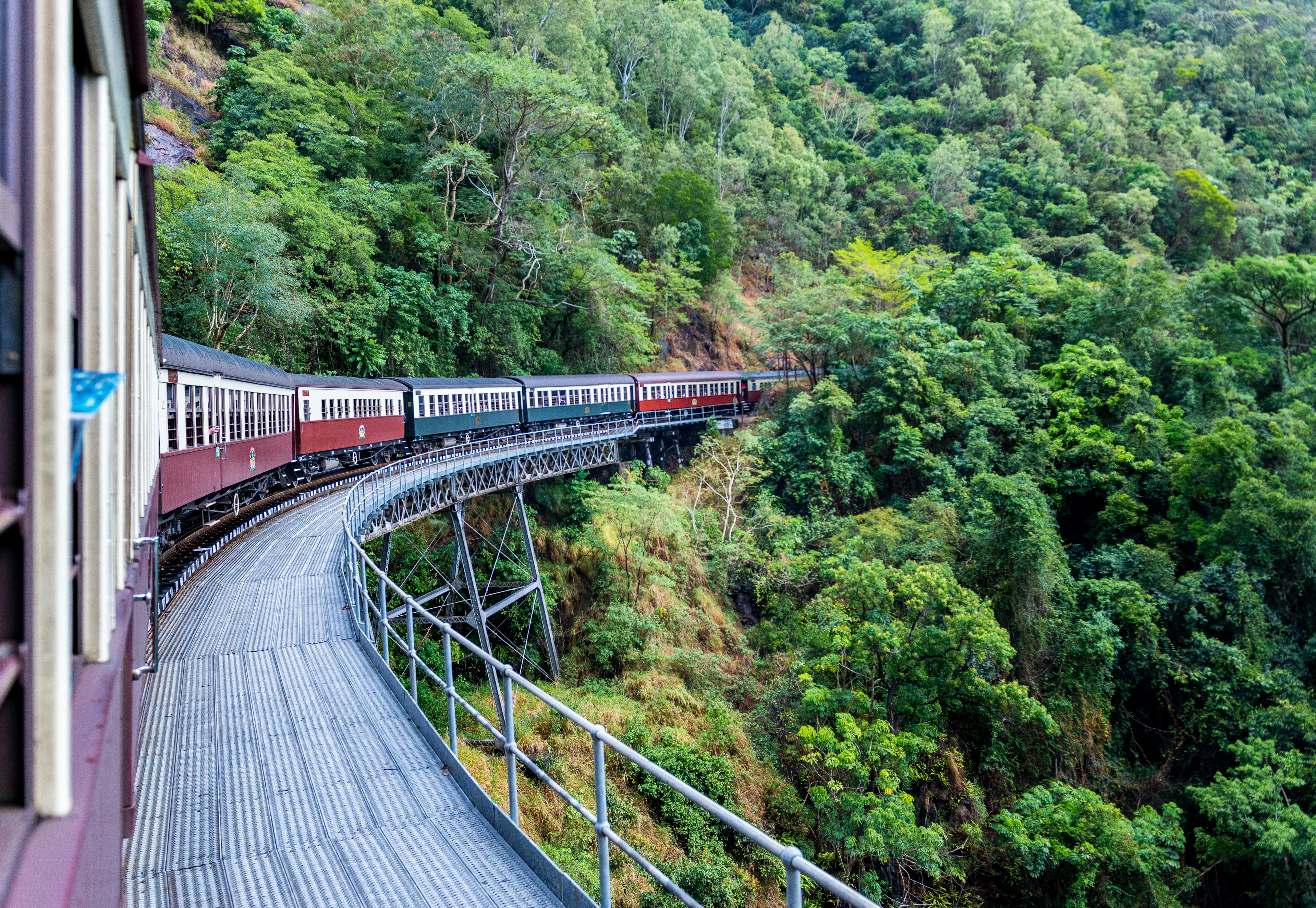
The heritage train travels between Cairns, Freshwater Station, and Kuranda Village, passing waterfalls, mountain cliffs, hand-carved tunnels, and the dramatic Barron Gorge. Built in the late 1800s, the railway offers a slow, scenic immersion into one of the oldest rainforests in the world.
Today, the experience is available in multiple formats including guided tours with transfers, self-drive options, Port Douglas departures, and combo experiences with Skyrail and wildlife attractions.
Plan your Kuranda Scenic Railway experience

- Distance: Freshwater Station is located approximately 11 km north of central Cairns, while Kuranda Village is about 37 km from Cairns via the scenic railway route. Port Douglas is located further north, with travel times to the Kuranda rail region typically taking around 1–1.5 hours by coach depending on the itinerary.
- Public transport: Limited bus services operate between central Cairns and nearby railway stations, though schedules vary by season. Most visitors prefer guided tour transfers or packaged transport options included in Kuranda Scenic Railway tickets.
- Taxi / rideshare: Taxis and rideshare services are widely available throughout Cairns and are one of the easiest ways to reach Cairns Railway Station or Freshwater Station for guided, self-drive, or combo rail experiences.
- Driving: Both Cairns Railway Station and Freshwater Station can be reached by car. Self-drive Kuranda Scenic Railway tickets typically use Smithfield Terminal, which offers free parking (as per ticket inclusions).
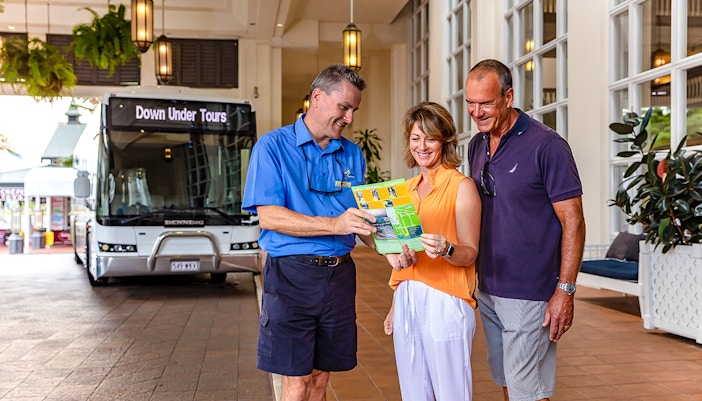
- Hotel transfers: Many Kuranda Scenic Railway tours include hotel pickup and drop-off from Cairns and Port Douglas, often combined with scenic rail, Skyrail, or wildlife attractions for a full-day curated experience.
What you’ll see on the Kuranda Scenic Railway
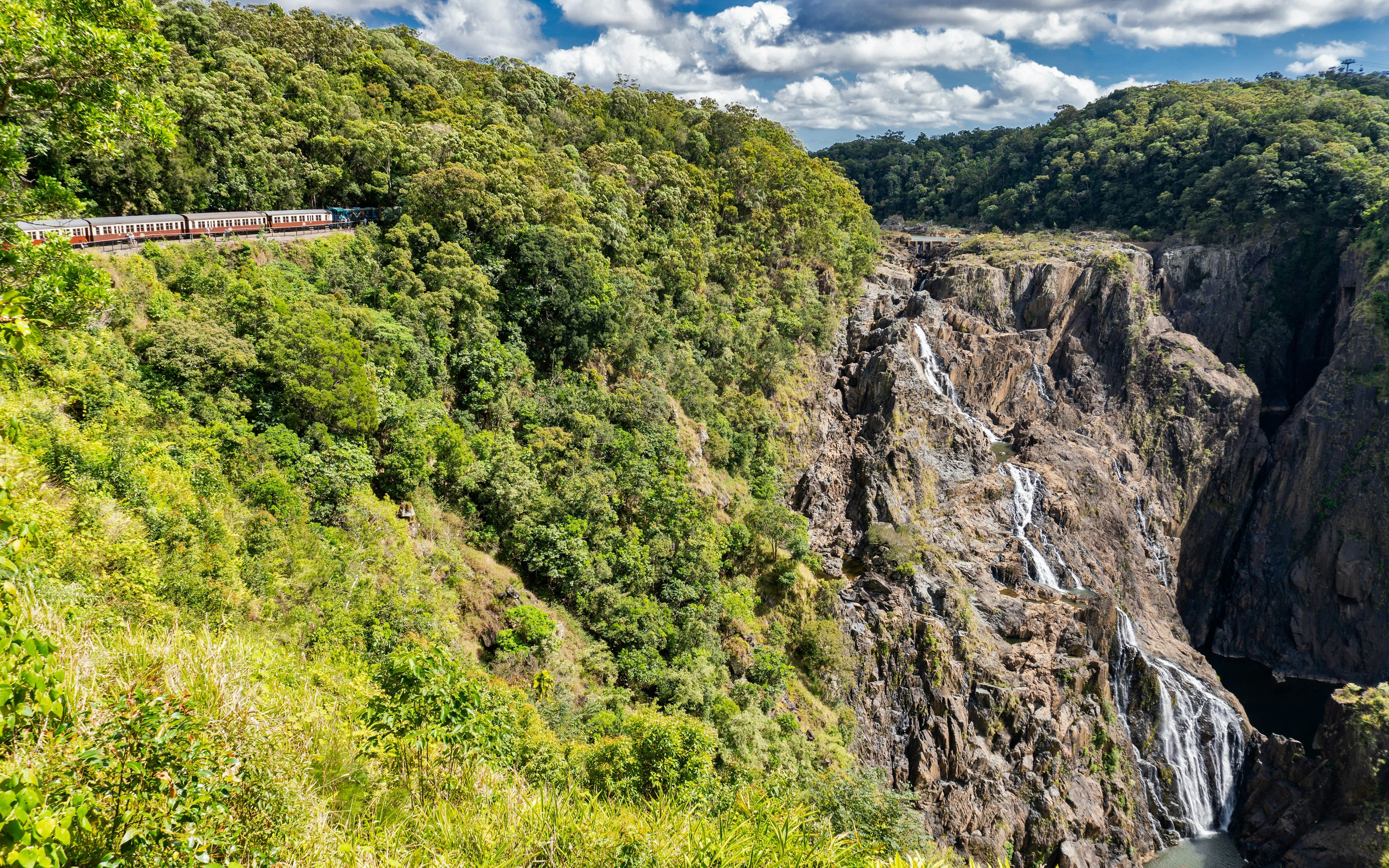
1/6
Barron Falls
One of the railway’s most famous highlights, Barron Falls features dramatic cascading waterfalls surrounded by dense rainforest and lookout viewpoints.
Stoney Creek Falls
Known for its curved heritage railway bridge crossing directly in front of the waterfall, this is one of the most photographed sections of the journey.
Barron Gorge National Park
Travel through lush rainforest valleys, mountain cliffs, waterfalls, and protected Wet Tropics landscapes throughout the route.
Freshwater Station
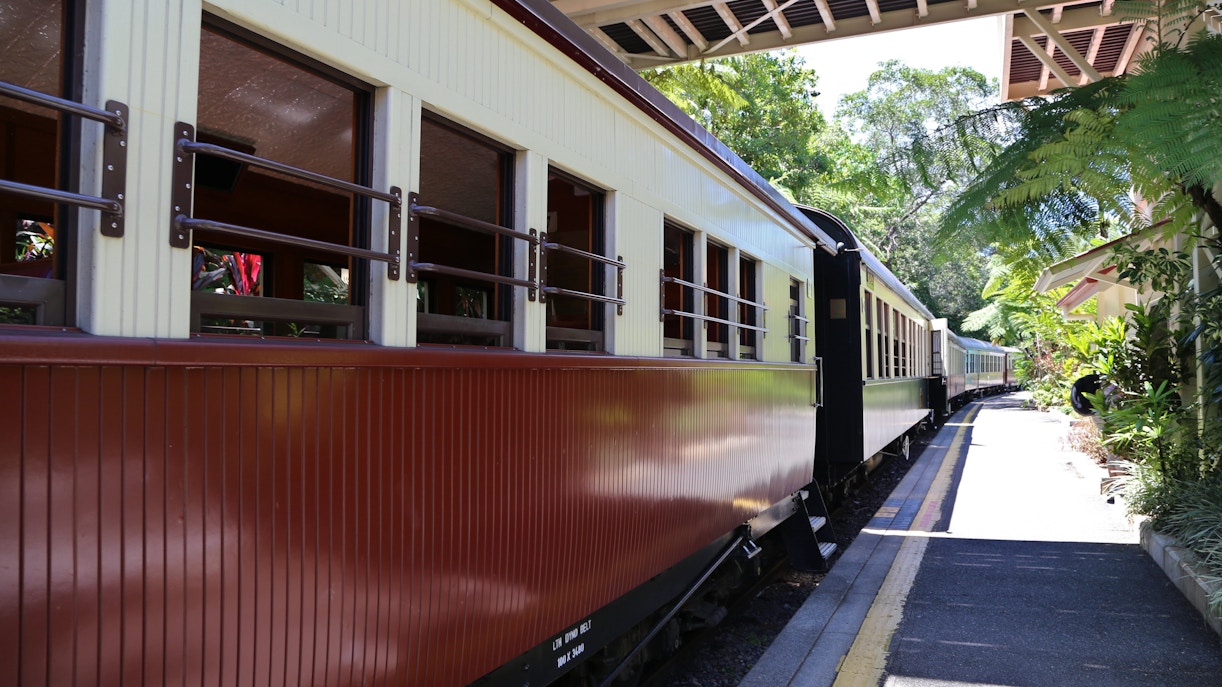
A charming heritage station surrounded by tropical gardens, popular for its relaxed boarding experience and historic railway atmosphere.
Kuranda Village
Explore rainforest markets, cafés, wildlife parks, galleries, and local attractions in this laid-back mountain village.
Skyrail Rainforest Cableway
Many experiences combine the railway with Skyrail, offering panoramic aerial views above the rainforest canopy and Barron Gorge.
History of the Kuranda Scenic Railway
- 1873: Gold discoveries in the Hodgkinson region increased demand for a reliable transport route connecting inland settlements with the coast near Cairns.
- 1882: Construction of the Cairns-to-Kuranda railway officially began as part of a major engineering project through dense tropical rainforest and rugged mountain terrain.
- 1886: The railway line successfully reached Kuranda Village after years of difficult construction involving hand-cut tunnels, bridges, and steep mountain sections.
- 1891: The rail line was extended further inland toward Herberton, improving access to mining and agricultural regions across Far North Queensland.
- Early 1900s: The railway became a vital transport link for local communities, carrying passengers, supplies, produce, and mining goods through the region.
- 1930s–1950s: Kuranda grew in popularity as a scenic destination, with visitors travelling by rail to experience rainforest landscapes and mountain views.
- 1960s: Improved road access reduced the railway’s importance for transport, but its reputation as a scenic tourist experience continued to grow.
- 1988: The Wet Tropics of Queensland, including the rainforest surrounding the railway, received UNESCO World Heritage status, increasing global interest in the route.
- 1995: Skyrail Rainforest Cableway opened, creating the now-famous Railway + Skyrail combination experience.
- 2000s: Tourism-focused upgrades introduced improved heritage restoration, onboard commentary, and premium Gold Class experiences for visitors.
- Today: The Kuranda Scenic Railway is recognised as one of Australia’s most iconic heritage rail journeys, attracting visitors from around the world for its rainforest scenery, waterfalls, tunnels, and historic engineering.
What to do in Kuranda Village

1/7
Explore the rainforest markets
Kuranda’s open-air rainforest markets are filled with local crafts, handmade jewellery, Indigenous art, clothing, souvenirs, and tropical products. The shaded pathways and lush greenery give the markets a relaxed rainforest atmosphere.
Kuranda Koala Gardens
See koalas, quokkas, wombats, wallabies, freshwater crocodiles, and other native Australian animals in a compact rainforest wildlife park.
Birdworld Kuranda
Walk through a free-flight aviary where colourful parrots, lorikeets, cassowaries, and tropical birds move freely around visitors.
Australian Butterfly Sanctuary
Discover one of the Southern Hemisphere’s largest butterfly aviaries, home to hundreds of tropical butterflies including the famous blue Ulysses butterfly.
Enjoy cafés and local dining
Kuranda has plenty of rainforest-style cafés, bakeries, and casual dining spots ideal for lunch or a coffee break between attractions. Visitors can also find tropical desserts, ice cream stalls, and relaxed local pubs throughout the village.
Discover galleries and local crafts
The village is known for its creative community, with galleries and boutique stores showcasing Indigenous art, handmade ceramics, jewellery, woodcraft, and tropical-inspired homewares.
Take a scenic rainforest walk
Short rainforest walks and nearby lookouts allow visitors to enjoy quieter natural areas beyond the village centre. The cooler mountain climate and tropical scenery make Kuranda ideal for relaxed exploring.
Tips for riding the Kuranda Scenic Railway
- Choose a window seat for the best views: Window seats offer the clearest views of Barron Gorge, waterfalls, rainforest valleys, and heritage bridges throughout the journey.
- Arrive early before departure: Reach the station 20–30 minutes early for boarding photos, ticket collection, and time to explore the heritage station surroundings.
- Carry light rain protection in wet season: Tropical showers are common between November and April, especially when exploring Kuranda Village or Skyrail connections.
- Bring a camera for scenic sections: Highlights like Barron Falls, Stoney Creek Falls, and rainforest curves are among the most photographed parts of the journey.
- Book combo experiences early in peak season: Gold Class seats, Skyrail combinations, and Port Douglas tours can sell out quickly during the busy dry season months.
Frequently Asked Questions about Kuranda Scenic Railway
A historic train journey through the Wet Tropics rainforest between Cairns and Kuranda.
Around 1 hour 45 minutes to 2 hours one way.
Cairns Railway Station or Freshwater Station, depending on ticket type.
Yes, Skyrail + Railway combos are among the most popular options.
Many tours include hotel pickup from Cairns or Port Douglas.
Premium seating with refreshments and upgraded service onboard.
Yes, select tickets allow self-drive to Smithfield Terminal with parking included.
Yes, it offers rainforest markets, wildlife parks, and scenic village experiences.
Morning departures during the dry season offer the best overall conditions.