Daintree National Park: Your guide to rainforest tours & tropical landscapes
What is Daintree National Park?
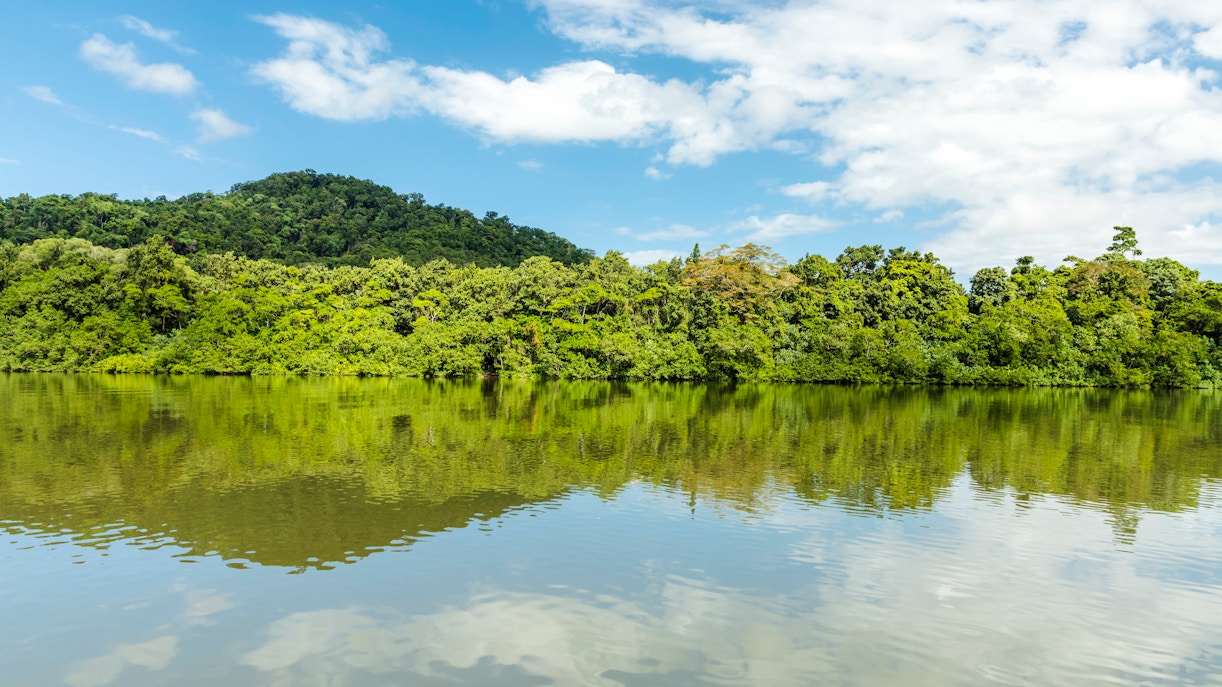
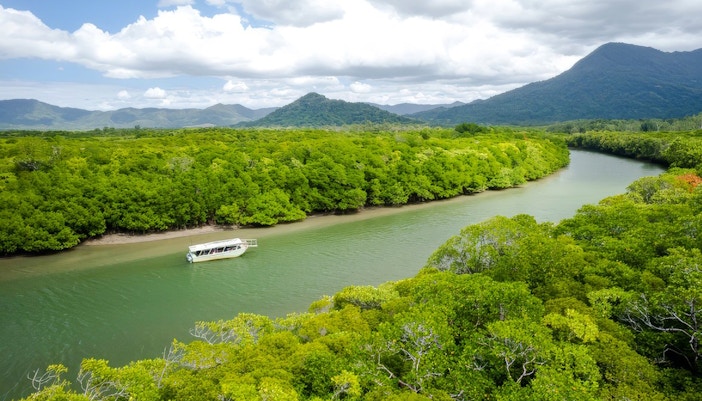
Daintree National Park is one of the world’s oldest tropical rainforests, located in Far North Queensland, Australia. Stretching from Mossman Gorge to Cape Tribulation, this UNESCO-listed region is known for its dense rainforest, pristine beaches, winding rivers, and extraordinary biodiversity. The park is home to ancient plant species, rare wildlife, and landscapes where rainforest meets the Great Barrier Reef.
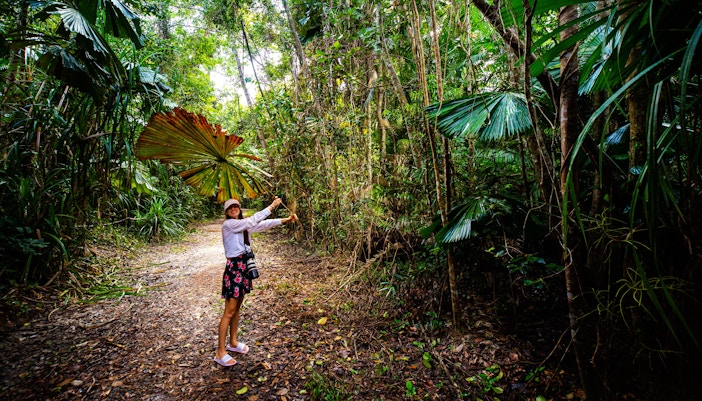
Unlike many rainforests around the world, Daintree National Park is easily explored through guided day tours, river cruises, boardwalk walks, and scenic lookouts. Whether cruising the Daintree River in search of crocodiles, walking through Mossman Gorge’s rainforest trails, or relaxing on Cape Tribulation’s beaches, the park offers an immersive introduction to Australia’s tropical wilderness and natural history.
Plan your visit to Daintree National Parl
Opening hours: Most Daintree National Park tours operate daily between 7:00 am and 6:00 pm, with departures staggered throughout the morning depending on pickup location, itinerary, and operator.
Duration:
Half-day tours: 4–6 hours (typically Mossman Gorge or river cruise–focused)
Full-day tours: 10–12 hours (Cairns/Port Douglas to Cape Tribulation return)
Best time to visit: Daintree is a year-round destination, but May to October (dry season) offers lower humidity, fewer mosquitoes, and better walking conditions. Early morning departures are ideal for wildlife spotting and cooler temperatures.
Daintree National Park is located in Far North Queensland, Australia, and forms part of the Wet Tropics World Heritage Area. The park stretches from Mossman Gorge in the south to Cape Tribulation in the north, where rainforest meets the Coral Sea and the Great Barrier Reef. This region is known for its ancient rainforest, winding rivers, and abundant wildlife.
Distance: Cairns is around 95 km (about 1.5–2 hours’ drive) from the Daintree River Ferry, while Port Douglas is around 45 km (45–60 minutes’ drive) away. From the ferry, Cape Tribulation is approximately 35 km further north.
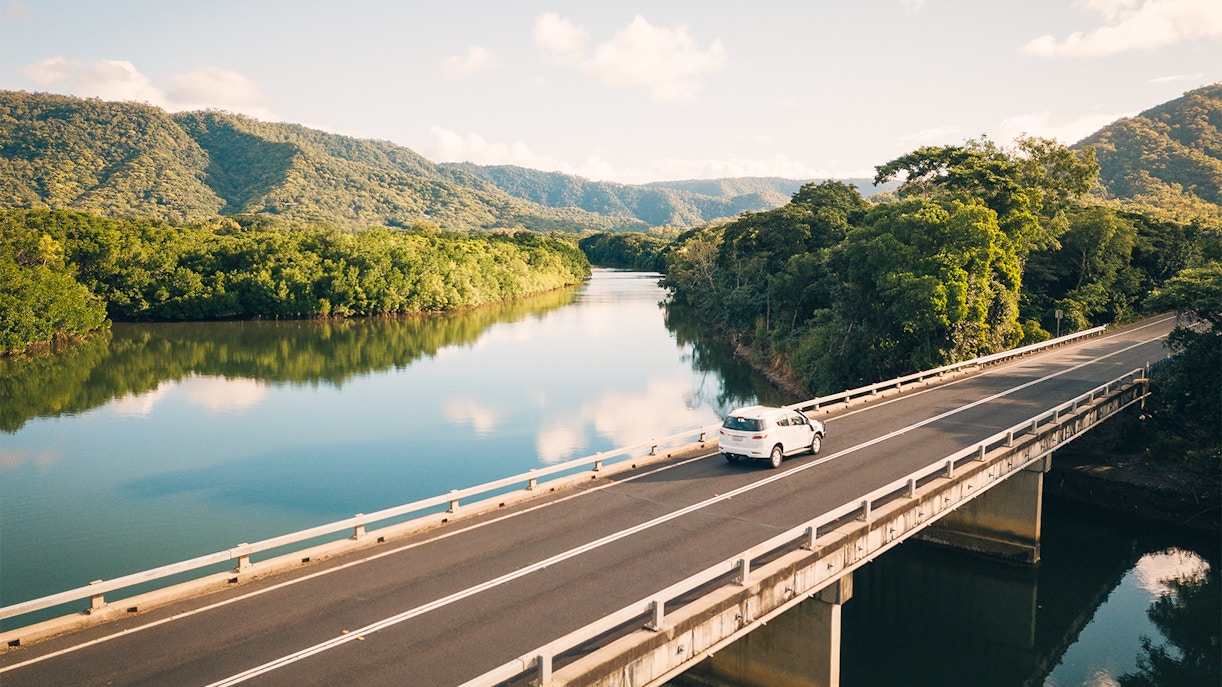
Transfers: Most guided tours include hotel pickup from Cairns, Palm Cove, or Port Douglas. Self-drive visitors must cross the Daintree River via cable ferry and drive north to Cape Tribulation. Public transport is limited, so guided transfers are the easiest option.
Top spots to see at & around Daintree National Park
1/5
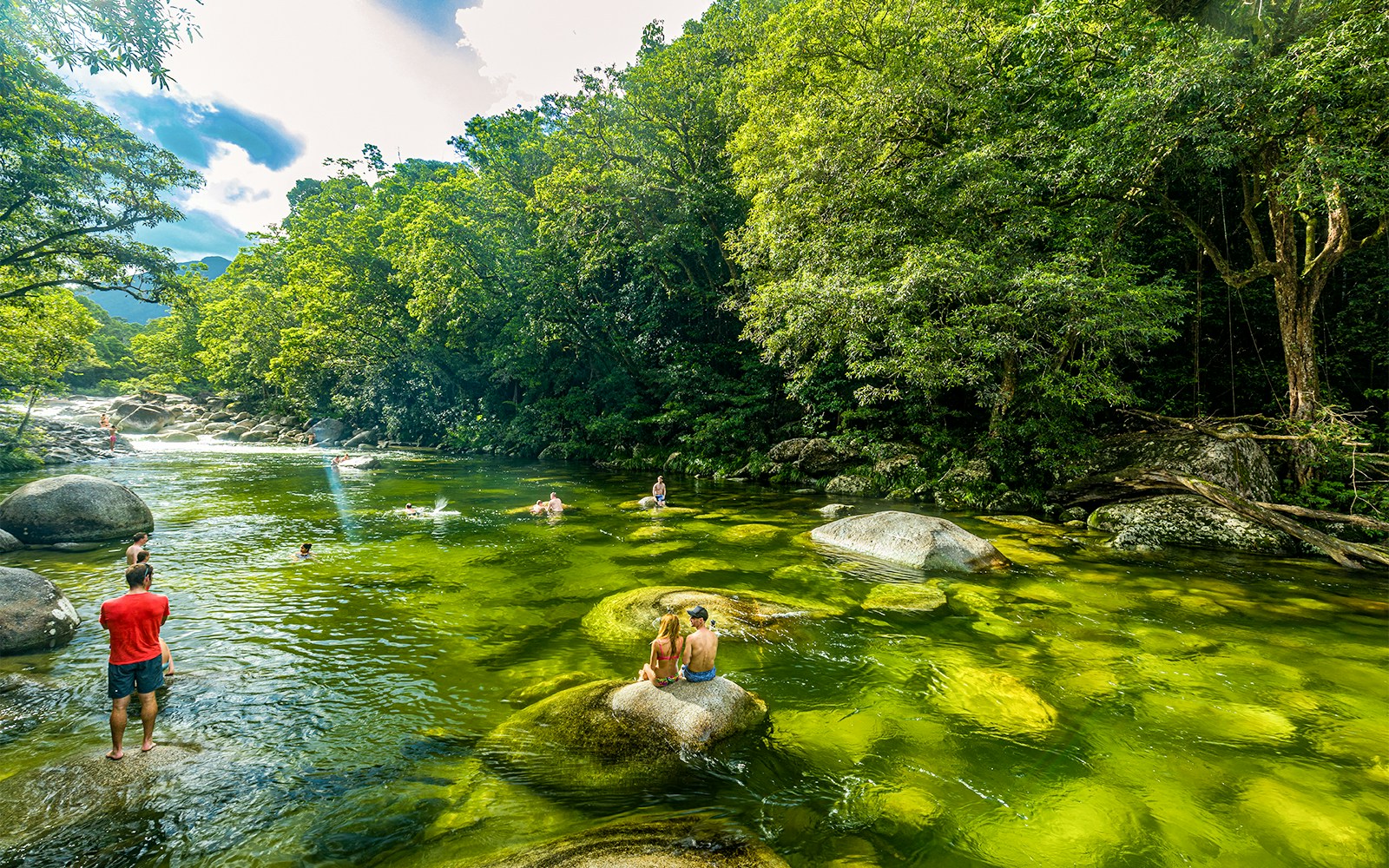
Mossman Gorge
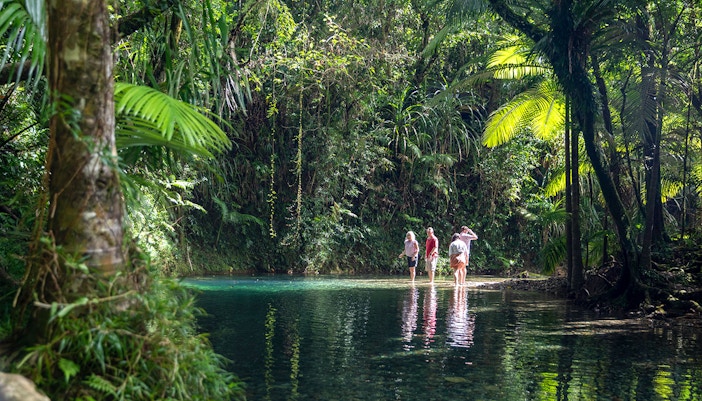
A scenic rainforest gorge with walking tracks, crystal-clear streams, and Indigenous cultural experiences. One of the most accessible and iconic parts of the Daintree.
Cape Tribulation Beach
Where the rainforest meets the Great Barrier Reef. Walk along tropical beaches, enjoy coastal views, and explore one of Australia’s most unique landscapes.
Alexandra Range Lookout
A panoramic viewpoint offering sweeping views over the Daintree rainforest canopy, coastline, and Coral Sea, perfect for photos and short stops on guided tours.
Emmagen Creek
A scenic freshwater creek surrounded by rainforest, ideal for relaxing stops and photo opportunities on guided tours.
Cow Bay Beach & Village
A small coastal community with cafés, art galleries, and beach access, offering a relaxed stop on longer Daintree itineraries.
Wildlife you can spot at Daintree National Park
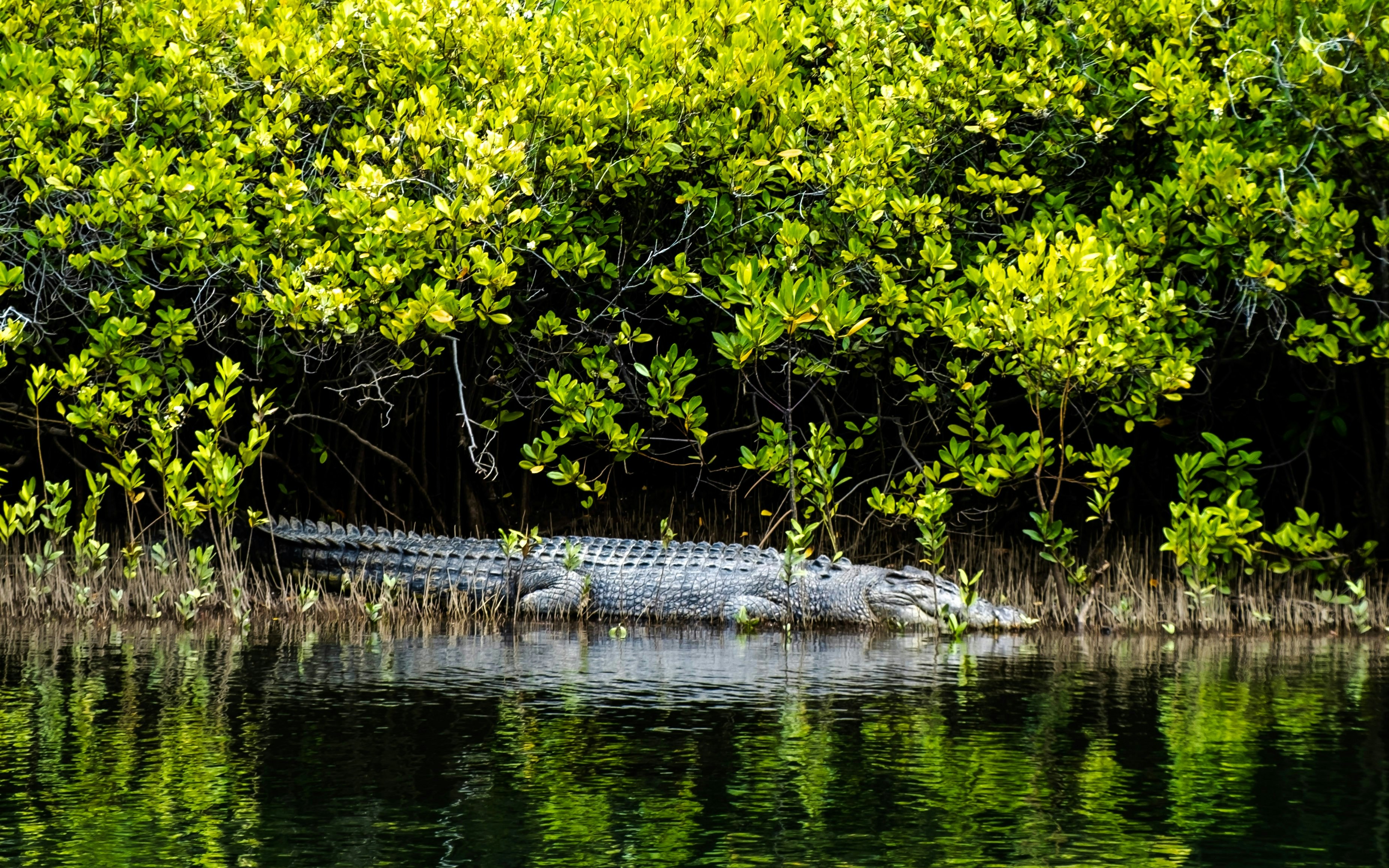
Saltwater crocodiles
Found in the Daintree River and coastal waterways. Crocodile cruises are the safest and most reliable way to see these iconic reptiles.
Tips for visiting Daintree National Park
Start early for the best experience: Early departures from Cairns or Port Douglas mean cooler temperatures, better wildlife sightings, and fewer crowds at Mossman Gorge and Cape Tribulation.
Avoid swimming in rivers and beaches: Crocodiles and marine stingers are present in the region. Only swim in designated safe areas or where your guide confirms conditions are suitable.
Take time at Mossman Gorge and lookouts: Even short stops offer excellent photo opportunities, rainforest scenery, and chances to spot wildlife.
Choose the right season for your travel style: The dry season (May–October) is cooler and ideal for walking, while the wet season (November–April) offers lush scenery but higher humidity and rain.
Be patient with wildlife spotting: Animals are unpredictable. Early mornings, river cruises, and quiet walks increase your chances of sightings.
Consider an overnight stay north of the river: Staying in Cape Tribulation or Cow Bay allows you to explore beaches, night tours, and quieter rainforest tracks without rushing.
Frequently Asked Questions about Daintree National Park
Daintree National Park is part of the Wet Tropics of Queensland, one of the world’s oldest tropical rainforests, with ecosystems ranging from lowland rainforest to mangroves and coastal forest.
The Daintree Rainforest is estimated to be over 180 million years old, making it one of the oldest surviving rainforests on Earth.
Daintree National Park is in Far North Queensland, Australia, north of Cairns and Port Douglas, stretching from Mossman Gorge to Cape Tribulation.
Yes, independent visits are possible via self-driving and boardwalks. However, guided tours are recommended for transport, safety, and expert insights into the rainforest’s ecology and wildlife.
Popular options include guided day tours from Cairns or Port Douglas, Daintree River crocodile cruises, rainforest walks at Mossman Gorge and Cape Tribulation, Indigenous cultural tours, and scenic coastal stops.
Yes. To reach Cape Tribulation, you must cross the Daintree River Ferry, which operates regularly and carries vehicles, buses, and pedestrians.
Yes. Many visitors explore Daintree on a full-day guided tour from Cairns or Port Douglas. Overnight stays are recommended if you want a slower-paced experience.
Mossman Gorge is a popular section of Daintree National Park known for its rainforest walking tracks, crystal-clear river, and Indigenous cultural centre.
Cape Tribulation is famous for being one of the few places in the world where the Great Barrier Reef meets the rainforest, with beaches, boardwalks, and scenic lookouts.
Yes. Saltwater crocodiles live in the Daintree River and coastal areas. Swimming in rivers and beaches is generally not recommended.
#From Cairns/ Port Douglas: Full Day 4WD Tour of Daintree, Mossman Gorge & Cape Tribulation with Lunch, Dessert & River Cruise